Showing posts with label Christine Lagarde. Show all posts

IMF kêu gọi tăng cường hệ thống tài chính toàn cầu

Thứ 3, 12/06/2012, 11:07
Các nhà hoạch định chính sách cần xây dựng và theo đuổi lộ trình rõ ràng không chỉ với tầm nhìn 5 hoặc 10 năm tới mà còn cần cả tầm nhìn vài tuần hoặc vài tháng tới.
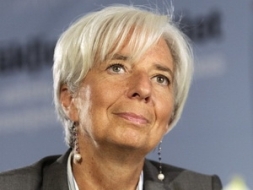
Ngày 11/6, tại diễn đàn “Đối thoại với các nhà lãnh đạo” được tổ chức ở New York (Mỹ), Tổng Giám đốc Quỹ Tiền tệ Quốc tế (IMF), Christine Lagarde, đã kêu gọi các nước tăng cường hệ thống tài chính thông qua các công cụ xử lý khủng hoảng tốt hơn và các cải tổ cơ cấu của hệ thống tài chính hiệu quả hơn.

Phần mềm chống tham nhũng giúp Hy Lạp thoát nợ?


Đăng bởi: Ban Biên Tập ngày: 09/06/2012 8:47 am
 0 Phản hồi
Giới chức Hy Lạp đang áp dụng một phần mềm chống tham nhũng nhằm ngăn chặn trốn lậu thuế và sự sách nhiễu của các nhân viên với hy vọng thoát vỡ nợ.
Hồi cuối tháng 5/2012, câu nói “Nếu người Hy Lạp đóng thuế thực sự, thì cuộc khủng hoảng hiện nay đã được giải quyết” của Tổng giám đốc Quĩ Tiền tệ Quốc tế Christine Lagarde đã gây ra một làn sóng phẫn nộ trên chính trường Hy Lạp. Cựu Bộ trưởng Tài chính Evangelos Venizelos nói bà Lagarde đã xúc phạm toàn thể nhân dân Hy Lạp. Tuy nhiên, câu nói trên khôg phải không có cơ sở khi Hy Lạp chẳng cần phải ngửa tay xin cứu trợ nếu thu đúng thu đủ số tiền đóng thuế của công dân nước này.

Vì sao G8 muốn giữ Hy Lạp ở lại Eurozone?


HOÀI AN
21/05/2012 09:36 (GMT+7)
pictureMỹ cho rằng, không có Hy Lạp, sự ổn định của Eurozone sẽ bị tổn hại, tác động tiêu cực tới toàn bộ hệ thống tài chính toàn cầu.
Hôm qua (20/5), lãnh đạo 8 nền kinh tế phát triển gồm Anh, Canada, Pháp, Đức, Italy, Nhật Bản, Nga và Mỹ (G8) đã kết thúc hội nghị thượng đỉnh thường niên của nhóm tại Trại David (Maryland, Mỹ).  

Trung Quốc ủng hộ IMF xử lý khủng hoảng nợ EU

19/03/2012


Phó Thủ tướng Trung Quốc Lý Khắc Cường ngày 18/3 đã có cuộc gặp và trao đổi ý kiến với Giám đốc điều hành Quỹ Tiền tệ Quốc tế (IMF) Christine Lagarde đang ở thăm và dự diễn đàn phát triển cấp cao Trung Quốc.


Phát biểu tại cuộc gặp, ông Lý Khắc Cường nhấn mạnh kinh tế cũng như thị trường tài chính thế giới đang đối mặt với nhiều thách thức, khủng hoảng nợ công tại một số quốc gia khó có thể giải quyết một cách nhanh chóng.

Xử lý hoán đổi nợ, Hy Lạp và Eurozone "nhẹ gánh"

11/03/2012

Ảnh minh họa. (Nguồn: Internet)

Các nhà đầu tư đã chấp nhận một thỏa thuận hoán đổi nợ lớn chưa từng có trong lịch sử cho Hy Lạp để cứu nước này khỏi nguy cơ vỡ nợ, song giới phân tích cho rằng điều này không có nghĩa "vở kịch" Hy Lạp đã hạ màn.


Các nhà lãnh đạo châu Âu đã hoan nghênh thỏa thuận mà Hy Lạp vừa đạt được như một bước ngoặt trong quá trình giải quyết cuộc khủng hoảng nợ công ở khu vực. Chủ tịch nhóm các bộ trưởng tài chính khu vực đồng euro (Eurozone) Jean-Claude Juncker nói những yếu tố cần thiết cho việc xem xét lần cuối để thông qua gói cứu trợ thứ hai dành cho Hy Lạp đã sẵn sàng.


IMF chief highlights bigger firewall, eurobonds to combat crisis


English.news.cn   2012-01-24 00:15:32

BERLIN, Jan. 23 (Xinhua) -- International Monetary Fund (IMF) chief Christine Lagarde on Monday called for a bigger rescue fund in the 17-member eurozone and the creation of the eurobonds in order to address the single currency bloc's debt crisis.
Speaking during a conference here in Berlin, Lagarde said it is important to set up an even larger firewall, without which "countries like Italy and Spain that are fundamentally able to repay their debts could be forced into a solvency crisis by abnormal financing costs."
Meanwhile, the IMF head gave the creation of the long-disputed "eurobonds" an extra push, saying it was a concrete step to realize the so-called risk sharing.

IMF's Lagarde joins in warning on austerity and growth

20 January 2012
Christine Lagarde IMF head Christine Lagarde signed the letter warning on the growth outlook
The heads of the IMF and World Bank have joined other influential figures in calling on countries to implement free trade, reform their economies and protect economic growth.
They warned that austerity programmes should "promote rather than reduce prospects for growth".
The warning came in a "call to action" in the run-up to the World Economic Forum in the Swiss resort of Davos.

Lagarde: Resolving European debt crisis requires global effort


(Bill O'Leary/ WASHINGTON POST ) - Lagarde, the former French foreign minister, has had to walk a fine line in her first months at the agency as she tries to reconcile the trudging political machinery of her home region with demands from elsewhere for Europe to do more, faster, to help itself.

International Monetary Fund chief Christine Lagarde is calling on countries outside Europe to help battle the region’s financial crisis, warning that the debt problems could drag down nations elsewhere by spilling over into global trade and international bank lending.

20/12 Q&A with the IMF’s Christine Lagarde


Christine Lagarde took over the International Monetary Fund in July after the arrest on charges of sexual assault of former managing director Dominique Strauss-Kahn (the charges were later dismissed). Since then, Lagarde, the former French finance minister, has been preoccupied with problems emanating from Europe. She has been trying to manage demands from outside the region, and within her own agency , for quicker action from Europe’s slow-moving political machinery. The agency has noticeably tried to step up the pressure on debt-ridden Greece, and Lagarde led a very public push for action to shore up European banks. But the crisis still festers. She sat recently for an interview to review her first months in the job.

Lagarde: Global economy facing gloomy prospects


English.news.cn   2011-12-17 14:05:31             

BEIJING, Dec. 17 (Xinhuanet) -- The head of the IMF has sketched a dim outlook for the global economy, and said all countries must work together to resolve Europe's escalating debt crisis.
Christine Lagarde says Europe’s problems will not be solved by Europe alone, and needs the efforts of all countries. She says, if the issues are not dealt with decisively, the global economy could confront the same threats that pushed the world into the Great Depression of the 1930s. She also cautioned financial markets to allow time for individual nations to work through the political process to arrive at a solution.

11/11 Ai đang chịu thiệt nhất trong “bão nợ” châu Âu?


HỒNG NGỌC
11/11/2011 11:41 (GMT+7)
pictureNhiều doanh nghiệp xuất khẩu đang chịu thiệt đơn thiệt kép do ảnh hưởng của bão nợ công ở châu Âu.
E-mailBản để inCỡ chữChia sẻ:facebooktwittergooglerss
Các quốc gia thành viên châu Âu đang trong vòng xoáy nợ nần chưa hẳn đã chịu thiệt lớn nhất khi khủng hoảng nợ công lan rộng từ Hy Lạp sang Italy, mà có khi lại là các nước mới nổi dựa nhiều vào xuất khẩu sang khu vực này.

Theo hãng tin CNBC, các nền kinh tế mới nổi trên thế giới hiện đang phải chịu nhiều rủi ro do mối quan hệ gắn bó của họ với lục địa già. Do đó, các quốc gia này khó có thể lại đảm đương được vai trò đầu tàu kéo thế giới ra khỏi vũng lầy suy thoái như từng làm trước đây.

09/11 "Kinh tế thế giới đang đối mặt thập kỷ mất mát”


AN HUY
09/11/2011 16:41 (GMT+7)
pictureNữ Tổng giám đốc Quỹ Tiền tệ Quốc tế, Christine Lagarde.
E-mailBản để inCỡ chữChia sẻ:facebooktwittergooglerss
Tổng giám đốc Quỹ Tiền tệ Quốc tế (IMF) Christine Lagarde vừa cảnh báo, cuộc khủng hoảng nợ châu Âu có nguy cơ đẩy nền kinh tế toàn cầu vào một “thập kỷ mất mát”, hãng tin CNBC cho hay. 
Bà Largarde cũng nhận định rằng, nhiệm vụ gánh vác trọng trách đưa tăng trưởng và niềm tin quay trở lại với kinh tế thế giới giờ phụ thuộc vào các nước giàu.

Bình luận trên được người đứng đầu IMF đưa ra tại một diễn đàn tài chính ở Bắc Kinh vào ngày 9/11. 

25/09 IMF không có đủ tài chính để đối phó khủng hoảng


Giám đốc Quỹ Tiền tệ Quốc tế (IMF), bà Christine Lagarde ngày 24/9 cho biết nguồn tài chính của IMF sẽ không đủ để đáp ứng các nhu cầu khủng hoảng tiềm tàng.


Phát biểu tại cuộc họp chung giữa IMF và Ngân hàng Thế giới (WB) ở Washinhton, bà Lagarde nói: "Hiện tại, với gần 400 tỷ USD, khả năng cho vay của chúng tôi là khá ổn, song số tiền này sẽ không thấm vào đâu so với nhu cầu tài chính tiềm tàng của các nước bị tác động cũng như các nước không bị ảnh hưởng bởi khủng hoảng...."

"Sẽ là rất hữu ích nếu sớm thảo luận về các nhu cầu và những phương án dự phòng. Chúng ta phải sẵn sàng phản ứng nhanh chóng, linh hoạt và có khả năng trên quy mô lớn," bà nói.

Các quan chức tài chính và ngân hàng cấp cao cùng các chuyên gia từ khắp nơi trên thế giới dự Hội nghị thường niên 2011 của IMF và WB để thảo luận các giải pháp ứng phó trước những thách thức mà nền kinh tế toàn cầu đang phải đối mặt.

Dự kiến, hội nghị thường niên này sẽ kéo dài tới ngày 25/9, trong đó có một loạt hội nghị chuyên đề và các sự kiện liên quan được tiến hành trước và trong các cuộc họp./.
VIETNAM+

23/09 IMF: Global economy needs collective action now


Chancellor George Osborne: ''They have got weeks not months to sort it out''
IMF chief Christine Lagarde has called for countries to "act now and act together" to keep on the path to economic recovery.
"We are by no means strangers, and we are linked by a common destiny," she said at the annual meeting of the IMF and the World Bank in Washington.
"And these turbulent times must bind us ever closer together."
Ms Lagarde was speaking after another week of volatility on the world's share markets.
In Europe, the main share indexes in London, Paris and Frankfurt all fell about 4% over the week.
Meanwhile, UK Chancellor George Osborne warned time was running out to tackle the eurozone debt crisis.
Speaking in Washington, where the G20 is also gathering, Mr Osborne said European leaders had six weeks to end the crisis.
'Dark clouds'
Ms Lagarde said: "There is a path to recovery. It's narrower than it was three years ago but there is a path and we have options."

“Start Quote

John Frary
That money had just gone in two or three weeks due to a very sharp downturn in a very short period of time”
John Frary from Bedfordshire has seen his retirement fund fall by £7,000 in value in four weeks
But she added: "There are dark clouds over Europe and there is huge uncertainty in the US. And with that we could risk a collapse in global demand.
"Well, so what? Let's remove the clouds and remove the uncertainty. Easier said than done, and it requires clearly a collective action.
"We are all in it together and nobody should be under any illusion that there could be a de-coupling."
Global shares had slumped on Thursday, sparked by a Federal Reserve warning late the previous day about the outlook for the US economy.
And on Friday, Greece denied media reports it was contemplating defaulting on its debts, with creditors taking a 50% hit on Greek government bonds.
Finance Minister Evangelos Venizelos said Athens was focusing on reducing its debt levels.
"All other discussions, rumours, comments and scenarios which are diverting our attention from this central target and Greece's political obligation... do not help our common European task," he said.
Also on Friday, credit rating agency Moody's downgraded eight Greek banks due to concerns about Greece's ability to pay back its debts.
Two of the Greek banks downgraded, the Emporiki Bank of Greece and General Bank of Greece, are majority-owned by France's Credit Agricole and Societe Generale respectively.
Unimpressed
Thursday's market falls had sparked the G20 to announce a commitment "to take all necessary actions to preserve the stability of banking systems and financial markets as required".

Which way now for Greece?

A maze
Make your way through the maze of Greece's debt decisions
It said it would follow up this pledge with a "bold action plan" at the beginning of November.
Analysts said investors were unimpressed by the announcement.
"The statement from the G20 last night may have taken the edge off the current bitter market sentiment, but the reassurances from the finance ministers lack substance," said Jane Foley at Rabobank.
"Until politicians back their actions with words in respect to moving closer to a solution to the eurozone debt crisis, markets will continue to worry about a messy and painful outcome from the eurozone debt crisis."
The G20 has given little hint of what action it may take, but markets have long been calling for a substantial increase in the eurozone's communal bailout fund, the European Financial Stability Facility (EFSF), from its agreed level of 440bn euros ($596bn; £385bn).
Many investors also want the eurozone to issue bonds guaranteed by every one of the 17-member nations - so-called eurobonds. However, a number of policymakers, particularly those in Germany, have resisted the idea.
In July, European finance ministers proposed making the EFSF more flexible, allowing it to buy individual government bonds - which would bring down the cost of borrowing for heavily indebted nations - and to offer emergency credit lines to banks. However, the proposals have not yet been ratified.
Sense of urgency
Analysts say far swifter action is needed in order to soothe investors' jittery nerves.

“Start Quote

There still seems to be a large gap between what economists and markets say is needed - and politicians are able to provide. ”
"Markets work on a second-by-second basis, while politicians seem to be working to a monthly calendar," Jeremy Stretch from CIBC told the BBC.
UK Chancellor George Osborne also said that time was of the essence.
"There is a far greater sense of urgency than there was three weeks ago about the necessity for the eurozone to address its problems and there is pressure on the eurozone from across the international community," he told the BBC.
He said there was a recognition that a solution needed to be found in weeks not months, and a comprehensive solution needed to come from the G20 leaders' meeting in November.
The BBC's economics editor, Stephanie Flanders, said the chancellor was echoing comments from people outside the eurozone, who think the Europeans missed an important opportunity to resolve the situation over the summer.
They had the summit in July then the perception was that they all went on holiday, leaving question marks over the markets which has now cost them dearly, she said.
The Labour leader, Ed Miliband, has called for the November G20 meeting to be brought forward so that leaders can agree a plan for growth.
Jim O'Neill, chairman of Goldman Sachs Asset Management, suggested this weekend's meeting in Washington could mark the beginning of concerted action to tackle the debt crisis in Europe which is the cause of so much stock market volatility.
"The thing that really brought the world to a better place in 2008 was genuine collective action involving both the developed and the developing world through the G20," he told the BBC.
"The fact that they're all there together in [Washington] DC this weekend should lay the framework for thoughts about quite significant actions... sometime between now or possibly at the November G20 in France."

Comments

Jump to comments pagination
  •  
    -1

    Comment number132.

     
    The biggest threat to the World Ecomony (and what has been since 2008) is the constant drip - drip of negative reporting of ecomonic data and news.

    Theis CONTANT news of negativity is ruining the economies around the world and undermining any confidence we have.

    Just this week Madam Legrade has, by speaking out, done untold damage. 

    I don'f want lies. I've simply heard enough.
  •  
    0

    Comment number94.

     
    What we are witnessing are the first of the crisis's that herald the extremely serious future traumas due to overpopulation, resource depletion, the failure of democracy. The power concentration has changed on a global scale. There is no peaceful way out for the West but to accept a massive fall in living standards, civil unrest, environment destruction, and even less culture and democracy.
  •  
    -2

    Comment number80.

     
    As my investments have lost a lot of money in recent weeks due to the indecision of European leaders, can I sue them for my loss? If I was a shareholder in a company whose management made lousy decisions I would have some recourse, but it seems not when political leaders cause shareholder value to be destroyed.
  •  
    +8

    Comment number27.

     
    The IMF seems not to understand that the leaders of nation states are answerable to their people, and that the people are tiring of 'solutions' that appear to benefit the global kleptocrasy at their expense. Lets stop kicking the can up the road and confront the problem we have created.
  •  
    0

    Comment number17.

     
    There's no other way for Governments to deal with this crisis, than to cut Government-spending. For too long, they have wasted vast amounts of money on fascile and expensive Social-engineering, Benefits and especially vote-catching 'giveaways' and purely dogmatic 'projects'.

    We HAVE to personally cut our expectations of Government Handouts and Nannying to remedy this - That goes for the EU too