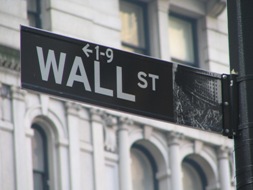
Showing posts with label SandP. Show all posts

S&P 500 tăng 2 tuần liên tiếp


Thứ 7, 16/06/2012, 07:58
Thị trường được hỗ trợ bởi dự đoán các NHTW sẽ hành động để thúc đẩy tăng trưởng.
Tuần qua, thị trường chứng khoán phố Wall tăng điểm đồng loạt. Chỉ số S&P 500 lần đầu tiên tăng điểm trong 2 tuần liên tiếp kể từ tháng 4 tới nay. Thị trường được hỗ trợ bởi dự đoán các NHTW sẽ hành động để thúc đẩy tăng trưởng. 

Đóng cửa phiên 15/6, chỉ số S&P 500 tăng 1% lên 1.342,84 điểm – mức cao nhất kể từ ngày 11/5. Chỉ số Dow Jones tăng 0,9%, lên mức 12.767,17 điểm. Tổng cộng đã có 7,5 tỷ cổ phiếu được giao dịch trong phiên, cao hơn 11% so với mức trung bình 3 tháng.

23/09 What the financial markets are telling us about the economy

 at 01:53 PM ET, 09/23/2011


(Jin Lee - AP)
Markets can get it wrong. Sometimes briefly (the flash crash of May 2010) and sometimes for years (the dot-com boom). But prices in financial markets do convey something about the best guess of where the world is heading, and if you know how to interpret prices you can gather what the cumulative wisdom of every financial whiz who is trying to trade for a profit. 
So, after firing up the Washington Post Bloomberg terminal and poking around a bit, here’s what those markets are telling us. (All prices are at approximately 1:00 p.m. Friday) 
First, bonds. Ten year U.S. Treasury bonds are currently in such high demand that investors are willing to settle for a yield of only 1.77 percent; that level was even lower, an all-time record low as it happens, on Wednesday. At current stock market levels the Standard & Poor’s 500 is paying dividends of 2.3 percent. 
Usually it’s the other way around: The government typically must pay a higher yield on its bonds than the stock market pays out, because investors expect stock prices to rise over time whereas bonds only pay back the amount invested after a decade. 
The earnings of the Standard & Poor’s 500 companies add up to 8 percent of their combined stock market value, which is unusually high at a time that Treasury bonds are yielding 1.8 percent. That suggests investors are quite fearful about the corporate sector encountering rough years ahead. 
Over the longer run, the story is similar. Thirty year Treasury bonds are yielding 2.8 percent, down from 4.4 percent on July 1 and also near an all-time low. Global investors are willing to fling money at the U.S. government for nearly nothing. 
How about inflation?  By looking at the difference in yield between bonds that are indexed for inflation and those that aren’t, you can discern the market's inflation expectations (the analysis isn’t perfect, because different types of bonds have different degrees of liquidity, but the basic idea works). 
Just two months ago, financial markets were projecting that inflation would be near the 2 percent or so level that the Federal Reserve aims for. But now, markets are expecting annual inflation over the next five years of 1.3 percent, well below that level. Over the next decade, inflation is expected to be very low as well: Markets expect 1.6 percent annual inflation over the coming decade, down from 2.4 percent at the beginning of August. 
And while high oil prices stymied U.S. economic growth earlier in the year, markets are not seeing higher oil prices anytime soon. Futures markets prices predict that a barrel of West Texas Intermediate Crude, $79.92 today, will go for $82.86 in 2012 and $86.20 in 2015—higher, but still well below levels of just a few months ago. 
How about all this volatility in the stock markets? There have been 16 days since Aug. 1 when the stock market moved more than 2 percentage points in either direction. There were only two such days in the first six months of the year. 
One key index predicts the volatility will continue. The VIX index captures the amount of stock market volatility implied by the prices of options. It is at 41 today, up from a recent low of 16 on July 1—in other words, investors expect the stock market to be more than twice as volatile now as they did then. That said, expected volatility is still below its recent high on Aug. 8, and well below the record high of 81 reached in November 2008. 
So put all these numbers together, and what are the financial markets telling us? 
Nothing good, unfortunately. The markets may not be pricing in a certainty of a U.S. recession, but they see significant odds of one. And even if a recession is technically averted, there is no apparent confidence that the economy will begin growing rapidly anytime soon. 
We can only hope that, like in the dot-com bubble, this is one of those times when these allegedly efficient markets have gotten it wrong.

20/09 S&P quyết định hạ mức tín nhiệm nợ công của Italy

20/09/2011 | 08:21:00


Ảnh minh họa. (Nguồn: businessportaltoday.com)
Theo AFP, ngày 19/9, hãng xếp hạng tín dụng Standard & Poor's (S&P) đã hạ chỉ số tín nhiệm nợ công của Italy từ mức A+/A-1+ xuống mức A/A-1, đồng thời cho biết sự yếu kém về kinh tế, tài chính và chính trị của nền kinh tế lớn thứ ba trong khu vực đồng tiền chung châu Âu (Eurozone) là nguyên nhân dẫn tới quyết định này.

Trong một tuyên bố, S&P cho biết việc họ hạ chỉ số tín nhiệm nợ công của Italy là do những viễn cảnh tăng trưởng kinh tế yếu kém của nước này.

Theo S&P, liên minh chính phủ điều hành yếu của Italy cũng là một nhân tố dẫn tới việc hạn chế khả năng của chính phủ trong việc đưa ra những phản ứng dứt khoát đối với các vấn đề của đất nước.

Ngoài ra tỷ lệ tham gia lao động thấp, lĩnh vực công hoạt động thiếu hiệu quả và đầu tư nước ngoài thấp cũng là một trong những nhân tố chính cản trở sự tăng trưởng.

Cơ quan xếp hạng tín dụng đối thủ của S&P là Moody cũng đã cho biết đang cân nhắc mức tín nhiệm của Italy, hiện đang ở mức Aa2, thấp hai bậc so với mức xếp hạng cao nhất của Moody là AAA.

Italy đang cố gắng trấn an các nhà đầu tư thông qua việc đưa ra một gói các biện pháp thắt lưng buộc bụng mới có thể giúp cân bằng ngân sách của nước này vào năm 2013./.
(TTXVN/Vietnam+)

11/08 10 nước còn được đánh giá AAA


 (11/08/2011)
Chính phủ Mỹ chưa hết lao đao vì cuộc tranh cãi nợ công thì lại gánh thêm đòn mới khi hãng tín dụng S&P hạ mức đánh giá tín dụng của Mỹ từ AAA xuống AA+, mặc dù hai mức này chỉ có một sự khác biệt nhỏ.
Hãng tín dụng Moody hiện vẫn duy trì mức AAA cho chính phủ Mỹ nhưng với triển vọng tiêu cực. Fitch cũng giữ quan điểm này, nhưng cảnh báo nếu mức nợ vượt quá 100% GDP (sau năm 2012), họ sẽ không duy trì mức đánh giá này.
Như vậy, hiện nay cả thế giới chỉ còn 10 nước sau vẫn giữ được mức đánh giá AAA với triển vọng ổn định.
1. Australia
GDP/người: 39.699 USD.
Australia được đánh giá mức AAA ổn định bởi S&P, Moody ngay từ đầu năm và vẫn không thay đổi cho đến nay. Mặc dù phải hứng chịu nạn lụt lội hồi đầu năm, nhưng quốc gia này có nguồn tài nguyên thiên nhiên dồi dào mà thế giới cần khi kinh tế bắt đầu phục hồi. Dân số thấp khoảng 21,5 triệu người, GDP năm 2010 khoảng 882,4 tỷ USD, dự trữ tài nguyên dồi dào, chi phí lao động thấp, tỷ lệ thất nghiệp thấp… những yếu tố này đã tạo thành tấm áo giáp bảo về Australia trước những biến động trên thế giới. Nợ công năm 2010 của nước này ước tính khoảng 22,4% GDP.
2. Canada
GDP/người: 39.057 USD
Canada được đánh giá AAA vững chắc cho dù nước này có quan hệ thương mại lớn với Mỹ. Canada có nguồn tài nguyên thiên dồi dào và các công dân không hào hứng với việc đầu tư bất động sản bằng tiền vay ngân hàng như Mỹ. Dân số nước này ít, chỉ khoảng 34 triệu dân, GDP vào khoảng 1,33 nghìn tỷ USD, nợ chính phủ đến cuối năm 2010 khoảng 34% GDP. Cả Moody và S&P đều không nghi ngờ gì về mức đánh giá AAA và triển vọng ổn định dành cho Canada. Thậm chí, có thể nói rằng Canada là nước an toàn tín dụng nhất ở phía Tây Bán cầu.
3. Đan Mạch
GDP/người: 36.449 USD
Đan Mạch có một nền kinh tế tương đối mạnh và dân số ít, dân trí cao. Quốc gia này phụ thuộc nhiều vào thương mại quốc tế về hàng hoá và dịch vụ, với số dân khoảng hơn 5,5 triệu. GDP vào khoảng 201,7 tỷ USD. Nguồn ngân sách dư dả chính là yếu tố đã giúp Đan Mạch có đủ khả năng chi tiêu phục hồi kinh tế. Quốc gia này cũng đã chọn giữ đồng tiền riêng thay vì sử dụng đồng euro. Tỷ lệ sinh thấp, dân số già, hệ thống thuế, chính sách nhập cư và thay đổi khí hậu là những rủi ro trong dài hạn với đất nước nhỏ bé này. Tuy nhiên, tỷ lệ thất nghiệp dưới 5% và nợ chính phủ năm 2010 chỉ dưới 46,6%
S&P và Moody đều dành mức đánh giá cao nhất AAA cho Đan Mạch với triển vọng ổn định.
4. Đức
GDP/người: 36.033 USD
Đức vẫn được coi là "Vua của đồng euro" với nền kinh tế vững mạnh. Với dân số 81,4 triệu người, là nền kinh tế lớn thứ 5 thế giới, Đức không thể không đi đầu trong các chương trình hỗ trợ các nước khu vực đồng euro. GDP năm 2010 là 2,94 nghìn tỷ USD, tỷ lệ thất nghiệp thấp, lực lượng lao động có trình độ cao... Các hãng đánh giá chẳng có lý do gì để không dành cho Đức mức đánh giá cao nhất.
Những vấn đề rủi ro với kinh tế Đức hiện là thâm hụt ngân sách, các chương trình trợ cấp, giảm thuế, xu hướng dân số già, tình trạng nhập cư và trách nhiệm đi đầu trong việc trợ giúp khu vực đồng euro. Nợ nước ngoài ở mức chấp nhận được là 78,8% GDP năm 2010. Đức vẫn được đánh giá là sẽ duy trì mức AAA lâu dài.
5. Hà Lan
GDP/người: 40.764
Kinh tế Hà Lan khá ổn định so với các nước trong khu vực. Dân số nước này gần 16,8 triệu người và GDP khoảng 676,9 tỷ USD. Lực lượng lao động ổn định, thặng dư ngân sách, công nghiệp phát triển khiến nước này ở trong tình trạng an toàn hơn những nền kinh tế anh em. Xuất khẩu công nghệ cao,  tình hình tài chính ổn định sẽ giúp nước này ít bị ảnh hưởng nếu cuộc suy thoái xảy ra. Nợ công dự kiến ở mức 64,6% GDP năm 2010 và các hãng tín dụng không có lý do gì để đánh giá lại xếp hạng của Hà Lan.
6. Na uy
GDP/người: 52.012 USD
Na uy là một trong số ít các nước được đánh giá tốt nhất hiện nay. Tổ chức Thông tin Kinh tế (EIU) thậm chí còn chỉ dành mức đánh giá AAA cho mỗi Na uy trong báo cáo mới đây. Quốc gia này rất giàu tài nguyên với dân số thấp chỉ khoảng 4,7 triệu người. GDP cao vào khoảng 255,3 tỷ USD và tỷ lệ thất nghiệp rất thấp. Nợ công khoảng 47,7% GDP. Na uy là quốc gia giàu có nhờ vào xuất khẩu dầu mỏ, chiếm 50% giá trị hàng xuất khẩu của nước này. Nauy cũng có ngân sách lớn thứ hai thế giới với hơn 500 tỷ USD.
S&P và Moody’s đánh giá mức AAA ổn định cho Nauy, và các nhà đầu tư cũng đồng quan điểm, cho đến khi nào dầu thô và cá biển không còn được ưa chuộng nữa.
7. Singapore
GDP/người: 56.521 USD
Singapore là quốc gia châu Á duy nhất có mức xếp hạng AAA ổn định. Mặc dù dựa nhiều vào giao dịch ngoại thương, nhưng các nhà đầu tư vẫn coi Singpore là nơi an toàn nhất hiện nay ở châu Á. Số dân chỉ khoảng 4,74 triệu người trong khi GDP lên tới 291,9 tỷ USD. Singapore không tránh được cơn suy thoái chung, nhưng vẫn chứng minh được bằng đà phục hồi mạnh mẽ. Mặc dù tỷ lệ nợ công tương đối cao ở mức 102,4% GDP nhưng quốc gia này có Quỹ tiết kiệm hưu trí (CPF - một dạng quỹ tiết kiệm cho tương lai, mỗi công dân Singapore phải đóng đến 30% lương hàng tháng cho quỹ này). Từ năm 1980 đến nay, nước này chưa khi nào vay tiền nước ngoài để bù đắp thâm hụt ngân sách. Nếu S&P và Moody không lo lắng gì về mức đáng giá cao nhất cho Singapore thì đương nhiên các nhà đầu tư cũng không. Rủi ro duy nhất ở đây là những hành động quân sự, biến đổi khí hậu hay những sự kiện địa chất bất thường.
8. Thuỵ Điển
GDP/người: 38.031 USD
Thuỵ Điển là đất nước lớn nhất ở bán đảo Scandinavia với gần 9,1 triệu dân. GDP khoảng 354,7 tỷ USD năm 2010. Nợ nước ngoài năm 2010 khoảng 40,8 % GDP, cực kỳ thấp so với khu vực châu Âu. Quốc gia này không bị tàn phá bởi Chiến tranh Thế giới thứ hai với quan điểm trung lập. Thuỵ Điển dựa nhiều vào xuất khẩu nên cũng không miễn dịch được trước cơn suy thoái kinh tế thế giới. Chính phủ đã đưa ra một số cải cách chính sách tài chính để tạo đà phục hồi. Tình trạng dân nhập cư và xu hướng dân số già đang là những thách thức, nhưng các tổ chức tín dụng đều thống nhất về đánh giá AAA cho đất nước này.
9. Thuỵ Sỹ
GDP/người: 41.663 USD
Thuỵ Sỹ là nước duy nhất vẫn duy trì đà tăng trưởng trong bối cảnh châu Âu và thế giới chìm trong suy thoái năm 2011. Quốc gia nhiều đồi núi này có số dân khoảng 7,6 triệu người với GDP năm 2010 là 324,5 tỷ USD. dành  Tỷ lệ thất nghiệp ở mức cực kỳ thấp, nợ công chỉ 38,2% GDP năm 2010; thuế khoá thấp ; hệ thống chăm sóc y tế linh hoạt ; rào cản chống nhập cư; mô hình hưu trí thích hợp... chính là những yếu tố giữ cho hạng mức AAA của nước này hầu như không bị ảnh hưởng.
10. Áo
GDP: 39.634 USD
Áo là nước được đánh giá kém nhất trong số 10 nước trên đây. Thực ra khá ngạc nhiên khi Áo được các tổ chức tín dụng đánh giá AAA với triển vọng ổn định. Hoạt động kinh tế của nước này gắn chặt với khối PIIGS (gồm những nước Tây Ban Nha, Bồ Đào Nha, Italia, Hy Lạp, những nước này đang lao đao vì cuộc khủng hoảng nợ công) đã khiến tình hình tài chính của Áo bị ảnh hưởng nhiều. Dân số thấp khoảng 8,2 triệu người và GDP năm 2010 xấp xỉ 332 tỷ USD, tỷ lệ nợ nước ngoài là 70,4% GDP. Tuy nhiên, có thể mối quan hệ chặt chẽ với Đức đã giúp nước này duy trì mức đánh giá AAA.
Cùng với Phần Lan, Pháp, Anh, Áo là những nước vẫn được đánh giá AAA nhưng triển vọng không tích cực, nguy cơ xuống hạng của các nước này đang ở mức cao.
PV Web

07/07 Dishonesty in the debt talks


Every serious observer knows that we need to increase our country’s debt ceiling and get behind a comprehensive, balanced, bipartisan solution to our $14 trillion debt and our $1.5 trillion annual deficit.
So what are we waiting for?
We are waiting for politicians to quit drawing lines in the sand and admit that solving this gigantic problem in a time of divided government means that both sides will have to give ground.
We are waiting for business leaders to stop talking vaguely about the need to get our balance sheets in order and to call out elected leaders who stand in the way of doing it.
We are waiting for the leaders of Wall Street to speak out. They have recovered far more quickly than most Americans from the market meltdown of 2008, but they at least should understand the repercussions of playing Russian roulette with the debt ceiling.
I’m glad that President Obama has invited congressional leaders to the White House Thursday to discuss possible solutions to our country’s fiscal crisis. We add more than $4 billion to the national debt every day that we fail to act, and the Treasury’s Aug. 2 deadline on the debt ceiling is fast approaching.
For months, we have known that no plan will succeed if it just slashes programs such as Medicare or imposes big hikes in tax rates. We’ve known that we need a plan that eliminates at least $4 trillion in debt over the next decade, slows the growth in entitlement programs and raises new revenue through tax reform.
Everything I learned about our economy and the financial markets as a businessman and as a governor tells me that we cannot wait much longer.
Business leaders all tell me the same thing: Failing to raise the debt ceiling will increase interest rates, gut consumer confidence, and drag down business investment and job creation. Every one-point increase in interest rates increases the national debt by $1.3 trillion over a 10-year period, and who knows how much rates could increase.
Yet with few exceptions, our business leaders have not demanded an end to the political brinkmanship. Wall Street, too, has been strangely silent.
Two years after a near-collapse of our financial markets, even with ominous credit-watch pronouncements issued last month by Moody’s, Fitch and Standard & Poor’s, many business leaders yawn as some elected officials prepare to punt on the full faith and credit of the United States.
Maybe business leaders think that this debate is just political theater and assume that a deal will emerge. Maybe they don’t believe politicians who declare that they will never vote to raise the debt ceiling or casually rule out entitlement reform or a penny of additional revenue.
If we don’t act boldly before Aug. 2, working from both sides of the balance sheet, the smart money soon will begin to bet against us on world financial markets. Add that to financial upheaval in Europe, and you have a recipe for an economic disaster far worse than we faced in 2008.
Unlike 2008, however, our nation has already used the traditional economic tools available to us. The Federal Reserve slashed interest rates, and Congress passed a fiscal stimulus, but the U.S. recovery remains weak. And still the debt grows.
These are the facts that demand tough choices: Federal spending is at an all-time high of 25 percent of our GDP, and our government revenue is about 15 percent of GDP, a 60-year low.
It doesn’t take an MBA to recognize that the only way to close that gap and restore fiscal stability is to attack both sides of the ledger. We must cut spending, including defense and entitlements, and we must find reasonable ways to increase revenue.
In six months of increasingly tough negotiations as part of the Senate’s “Gang of Six,” I’ve learned that failing to embrace a bold, comprehensive, bipartisan plan will wreck our economic recovery, kill jobs and place our country at a competitive disadvantage for decades.
The president’s bipartisan fiscal commission called its report “The Moment of Truth.” Here is the truth: We need to raise the debt ceiling and ignore irresponsible politicians who would let us default.
To regain fiscal health, we need a plan that cuts our debt by at least $4 trillion. It can achieve that only with spending cuts and greater revenue.
Elected leaders who ignore the truth and business leaders who indulge them will be responsible if we fail.
The writer, a Democrat, is a member of the Senate’s Banking, Budget, Commerce and intelligence committees. He is a co-founder of Nextel and was governor of Virginia from 2002 to 2006.

06/07 TTCK khắp châu Á lo lắng về khủng hoảng nợ châu Âu


A+ A- A-Kiểu đọc sáchThứ 4, 06/07/2011, 14:30

Cổ phiếu tài chính kéo lùi đã tăng trên thị trường chứng khoán châu Á phiên ngày hôm nay, nguyên nhân chính bởi Moody hạ xếp hạng tín dụng của Bồ Đào Nha.
Chỉ số MSCI của TTCK châu Á – Thái Bình Dương tăng 0,6% lên 137,78 điểm tính đến 3h30 phút chiều tại thị trường Tokyo sau khi hạ khoảng 0,1% vào trước đó.
Cứ 5 cổ phiếu lên điểm thì có 3 cổ phiếu giảm điểm. Vào đầu phiên, cổ phiếu tài chính kéo thị trường đi xuống sau khi Moody hạ xếp hạng nợ của Bồ Đào Nha xuống dưới mức đầu tư.
Ông Matt Riordan, chuyên gia quản lý quỹ tại Paradice Investment Management, nhận xét: “Việc Bồ Đào Nha bị hạ xếp hạng tín dụng không khiến thị trường ngạc nhiên. Tôi không nghĩ có ai đó quá lo lắng về các ngân hàng Trung Quốc bởi chính phủ nước này có khả năng tái cấp vốn để hỗ trợ cho các ngân hàng. Nhìn chung, tâm lý thị trường khá bối rối và đang chờ đón tín hiệu mới rõ ràng hơn.”
Tính đến phiên ngày hôm qua, chỉ số hạ 2,8% so với mức cao của năm thiết lập ngày 02/05/2011 bởi lo lắng về kinh tế Mỹ, khủng hoảng nợ châu Âu và các biện pháp kiềm chế lạm phát của Trung Quốc.
Chỉ số Nikkei 225 của thị trường Nhật tăng 1,1%. Chỉ số S&P/ASX 200 của thị trường Úc tăng 0,2%. Chỉ số Kospi của thị trường Hàn Quốc tăng 0,4%. Chỉ số Hang Seng của thị trường Hồng Kông hạ 0,4%. Cổ phiếu các ngân hàng trên thị trường chứng khoán Trung Quốc giảm điểm. Chỉ số Shanghai Composite của thị trường Trung Quốc hạ 0,23%.
Phiên hôm nay, cổ phiếu các công ty sản xuất hàng hóa nguyên liệu thô mang tính hỗ trợ quan trọng nhất với chỉ số MSCI của TTCK châu Á – Thái Bình Dương. Cổ phiếu nhóm ngành này tăng 0,8% và như vậy ghi nhận mức tăng cao thứ 2 trong nhóm 10 cổ phiếu ngành.
Cổ phiếu tài chính kéo lùi đã tăng trên thị trường chứng khoán châu Á phiên ngày hôm nay, nguyên nhân chính bởi Moody hạ xếp hạng tín dụng của Bồ Đào Nha và cảnh báo về triển vọng tín dụng của ngành ngân hàng Trung Quốc.
Tại thị trường Đài Loan, cổ phiếu HTC tăng 3,3% trước khi hãng này công bố kết quả kinh doanh vào ngày hôm nay. HTC có thể sẽ công bố lợi nhuận ròng đạt 16,6 tỷ đài tệ tương đương 577 triệu USD. Cùng kỳ, HTC công bố lợi nhuận 8,64 tỷ đài tệ.
Chỉ số S&P 500 tương lai tăng 0,1%, phiên ngày hôm qua, chỉ số S&P 500 hạ 0,1%.
Đình Hảo
Theo Bloomberg,Reuters

05/07 New Market Highs Through July: Technical Analyst

Published: Tuesday, 5 Jul 2011 | 12:47 PM ET
Text Size
By: Margo D. Beller
Special to CNBC.com
Paul Schatz, president of Heritage Capital, told CNBC Tuesday that after weeks of bullishness, he still expects the market to hit new highs this month and into early August.

But if the "rocket can’t go high enough into the stratosphere," he sees theS&P 500 falling back to 1250.
He is already searching for signs of weakness. With the Federal Reserve done with quantitative easing, "I’m looking for signs that liquidity is abating. I’m watching the performance of high-yield bonds. They are pretty good bellwethers of liquidity."
He is also looking foroutperformance in small-cap stocks because "they should sniff out any draining of liquidity."
Schatz, who gave no specific stock picks, also wants to see which sectors will lead the market higher.
"I don’t want to see consumer staples and utilities and health care leading this next rally," he said.  "I want to see energy lead. I want to see some areas oftechnology lead. I can hope that financials lead but I don’t think that’s going to happen. I want to see some folks willing to take risks."
______________________________ 
CNBC Data Pages:
______________________________  
CNBC's Companies in the News:
______________________________
Disclosures:
Disclosure information was not available for Paul Schatz or his company.
© 2011 CNBC.com

05/07 Hedge Fund Giants Are Coming Up Small This Year

Published: Tuesday, 5 Jul 2011 | 9:55 PM ET
By: Reuters


The first half of 2011 has been humbling for many of the $2 trillion hedge fund industry's biggest stars, with the likes of John Paulson, David Einhorn, and Louis Bacon losing money for their investors' money while underperforming the major U.S. stock market indexes.

Thomas Lohnes | AFP | Getty Images

At the year's half-way point, the average hedge fund was off 2.12 percent, preliminary data from Hedge Fund Research show. By contrast, the Standard & Poor's 500 gained 6 percent.
Only six months ago, few investors would have forecast that as of June 30, Paulson's flagship Advantage Fund would have lost 15 percent, or Einhorn's Greenlight Capital would be down  5 percent. Even Louis Bacon's flagship Moore Global fund, which has boasted average annual returns of 19 percent for more than two decades, was down 5 percent for the year through June 16.
The lackluster performances from so many top managers come at a time when the hedge fund industry is perceived to be roaring back to life following the financial crisis.
In the first quarter of 2011 alone, hedge funds took in $32 billion in new money from pension funds and other institutional investors, more than half the amount added during the entire year of 2010. Thanks to fresh demand, especially from pension funds, the industry now manages more money than it did before the beginning of the crisis during the summer of 2007.
Yet these men and other so-called smart-money traders showed themselves to be quite fallible this year when it came to navigating the fallout from events like Japan's earthquake and nuclear disaster, the uneven U.S. economic recovery, enormous volatility in commodity prices and ongoing concerns about Greece and the solvency of other European nations.
Some presumably savvy traders also have stumbled over bad bets entirely of their own making.
Paulson's $37 billion hedge fund empire has been pounded  by a disastrous $500 million loss on Chinese forestry company Sino-Forest [AA  16.39    0.08 (+0.49%)   ] whose financial statements have been called into question by a well-known short seller.
"The glory boys have had a tough time lately," said Charles Gradante, co-founder of Hennessee Group, which invests with funds and tracks industry performance.
Poor performance is sparking worry that unless these managers turn things around soon, some of the industry's biggest names will be hit with redemption notices in the second half of the year. A wave of requests from investors to get some, if not all, of their money back could force some managers to quickly liquidate positions to return cash fast.
Eyes on Paulson
Right now a lot of eyes are on Paulson & Co. Investors in his $18 billion flagship strategy have until the middle of August to decide whether they want to redeem some of their money by the end of the third quarter. Up until now, most Paulson investors have been loyal to the billionaire trader, given that he has earned them an average 20 percent a year in the past.

To be sure, six months is nearly an eternity on Wall Street and plenty of time for managers to post healthy gains.
Indeed William Ackman, whose Pershing Square Capital has delivered an average annual gain of 19 percent until now and is often down early in the year, was off 2.27 percent during the first first 5-1/2 months of the year.
Digging into the mid-year numbers, it appears many funds were fairing poorly thanks to one brutal month. Overall, funds were down 2.09 percent in June, marking their biggest decline this year, data from Bank of America Merrill Lynch analysts show. The bulk of hedge funds pursue an equity long/short strategy and these funds, on average, lost 3.07 percent in June, the analysts said, noting that only equity market neutral funds, as a group, posted positive returns in June.
More detailed data will be released later this week.
Even Dan Loeb, whose Third Point, has been one of the industry's top performers, took a mighty blow in June because of a big bet on gold, said one of his investors, who is prohibited to discuss performance publicly. Loeb's main fund fell 2.9 percent in June, slimming the year's gains to 6.3 percent.
Another fund trading higher this year is $2 billion Autonomy Global, a so-called global macro fund which bets on currencies and bonds and is up 4.5 percent this year.
For many managers, the hardest thing to gauge correctly this year has been the roller-coaster nature of the global economic recovery. Funds positioned to profit from an economic rebound by betting heavily on bank stocks and consumer products manufacturers were whipsawed by global events.
Greece is the Word
Yet ironically, Greece, one of the biggest financial headaches of the year, has been hard for many hedge funds to profit from. Industry experts say managers of big funds have refrained from betting against Greek sovereign debt in part because they don't want to be seen as profiting from the misery of the cash-strapped nation. Managers, already battling a reputation of acting like heartless vultures, are wary of being demonized by politicians for betting on a Greek default.
CNBC.com

So as an alternative to betting directly on a Greek default, some funds have opted for proxy trades that include wagering against the euro currency or shorting shares of European banks with big exposure to Greek debt. Now with a potential deal to allow the Greek government more time to pay down its debts, a few funds are going "long" Greece in the hopes of catching the rebound.
One such fund is Boaz Weinstein's $3.4 billion Saba Capital Management, which has been buying long-dated Greek bonds that are selling for about 40 cents on the dollar, said a person familiar with the fund's strategy. The former Deutsche Bank bond trader is said to favor Greece's 30-year sovereign debt because it sells at a substantial discount to the nation's short-term debt notes.
A person familiar with the trade said Saba is simultaneously buying so-called recovery swaps on those Greek bonds, a derivative that effectively locks in the price a bond would fetch in the event of a default. In the case of Greece, recovery swaps on the nation's 30-year sovereign bonds are selling for about 37 cents on the dollar.
Industry analysts say most hedge funds are shying away from the kind of Greek trade that Saba Capital, up about 3.5 percent this year, is doing because of the risk.
But with six months to go in the year, it appears many top managers will have to take on quite a bit of risk if they want to end 2011 firmly in the black.
Copyright 2011 Thomson Reuters. Click for restrictions.